

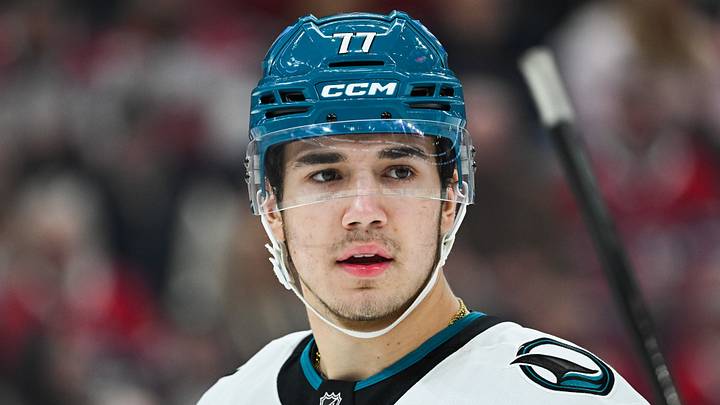
Nobody expected the San Jose Sharks to deliver a playoff spot in the first month of October. If you ignore everything happening on the ice, San Jose’s record itself should be right in line with the expectations of a team struggling to get out of the basement. This is a bad team, and they’re putting up bad results. What’s the big deal?
The big deal is that what’s happening on the ice can’t be ignored. It’s one thing for a bad team to generate poor results, but Sharks fans are not just seeing bad outcomes; they’re seeing a bad process. San Jose wasn’t a good team last season, and I suspect readers and analysts know that. But they were fun and dangerous. This year they are neither. Yes, they got a little PDO luck last season. But this year’s roster hasn’t just seen a decrease in shooting and save percentage. They’ve seen a decrease in every shot metric across the board and by a yardstick: shot share, share of shot attempts, expected goal share. It’s all bad.
But while we can yap all day about what the problems are, let’s focus on just one: the line combos. Starting at the top, it’s hard to understate how important having Macklin Celebrini next to Will Smith and Igor Chernyshov was. With those three on the ice, San Jose was outshooting opponents 40-22. With a 62 percent expected goal share, the team was handily winning the shot quality battle too. Ryan Warsofsky hasn’t been able to find a decent replacement in light of Chernyshov’s injury. In the minutes Mason Marchment and Michael Misa have played in place of the Russian power winger, San Jose is either losing those minutes handily or just barely treading water.
The trickle-down effect can’t be understated either. The trio with Misa, Ivar Stenberg, and Kiefer Sherwood have been especially brutal. San Jose is getting outshot 41-28 with them on the ice, and outscored 4-1. What this organization sees in Ty Dellandrea, I’m sure I have no idea. Not only is his line with Barclay Goodrow and Zach Ostapchuk posting an abysmal 24 percent expected goal share, but a lot of these players are forcing San Jose to play more shorthanded minutes. In fact, the fourth line along with Marchment are functionally taking twice as many penalties as they draw (collectively taking 21 penalties as of this writing, and drawing only 11). The impact of this shouldn’t be lost on anyone even if it appears lost on San Jose’s coaching staff. The probability of a goal being scored during a two-minute stretch of even-strength hockey is eight percent. On special teams? 24 percent. That’s pure, uncut sabotage.
Alexander Wennberg’s line with Marchment and Tyler Toffoli have been the only depth line in which San Jose is winning their minutes when said trio is on the ice. This begs the question: why can’t the Sharks find better alternatives? It’s not a simple question, nor are there easy answers. But there seem to be avenues the team has either been too eager to explore to poor results (Dellandrea’s usage), or avenues with potential that the team has been too slow to adopt, like Misa on the top power play unit (Marchment and Toffoli have been weak links).
To be clear, this is not to make excuses for the team’s poor execution due to health. Cherynshov and Wennberg are solid players, but if these are somehow San Jose’s missing links then they’re in more trouble than they appear. Nor is this a referendum on Warsofsky. Mike Grier’s moves aren’t exactly paying off, with the blue line being its own rabbit hole of miscues and problems.
However, the line combos are a useful window into San Jose’s problems because it would seem as if the organization is as out of sync as the players on the ice.
 Add us as a preferred source on Google